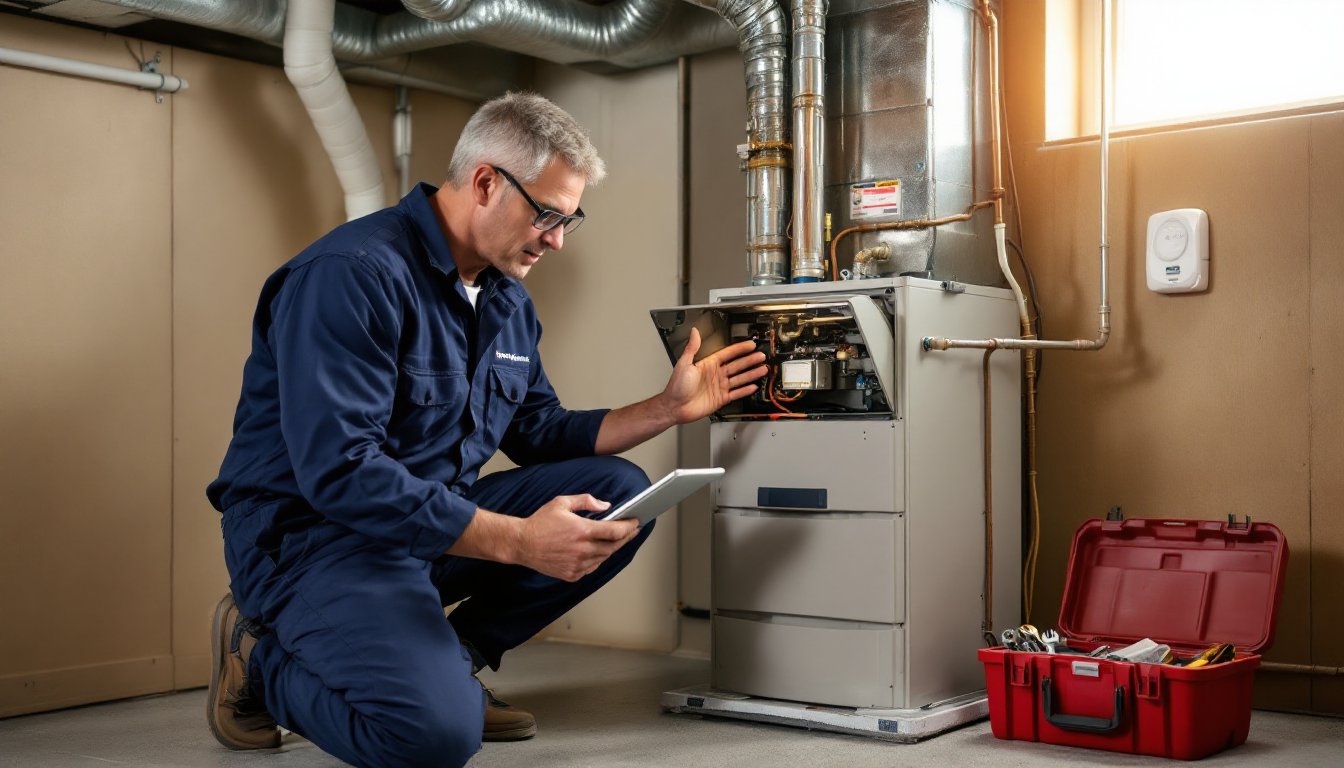
A furnace humidifier keeps indoor air comfortable during winter months, but neglected maintenance turns it into a breeding ground for mold and mineral deposits. Proper upkeep doesn’t just protect air quality, it also prevents costly repairs and keeps the HVAC system running efficiently. Most homeowners can handle the entire maintenance routine in under an hour with basic tools. This guide walks through the inspection, cleaning, and replacement tasks that keep a furnace humidifier working properly season after season.
Table of Contents
ToggleKey Takeaways
- Regular furnace humidifier maintenance prevents mold, mineral buildup, and costly repairs while improving HVAC efficiency and lowering energy costs by 3–5% during heating season.
- Replace the water panel annually in late September or early October, and perform mid-season inspections in January or February, especially in homes with hard water above 10 grains per gallon.
- Proper installation is critical: install the water panel with the textured side facing the furnace blower, and ensure it sits flush in the tracks to prevent water from bypassing the pad and leaking into ductwork.
- Clean the humidifier housing, distribution tray, and drain tube using a 50/50 white vinegar and water solution to dissolve mineral scale without damaging components.
- Monthly visual checks during heating season—looking for standing water, mold, or dry panels—catch problems early and help avoid voiding manufacturer warranties that require annual maintenance proof.
- Most homeowners can complete furnace humidifier maintenance in under an hour using basic tools, making this DIY task a cost-effective way to protect indoor air quality and home comfort.
Why Regular Furnace Humidifier Maintenance Matters
Mineral buildup from hard water clogs the water panel (also called an evaporator pad) and reduces humidifier output. White dust on furniture and vents signals that the system is pushing mineral particles into the air instead of clean moisture.
Mold and bacteria thrive in stagnant water reservoirs, particularly in bypass and drum-style humidifiers. Once established, these contaminants circulate through ductwork and into living spaces, triggering respiratory issues and allergies.
A clogged or failing humidifier forces the furnace to work harder. Dry air feels cooler, so occupants raise the thermostat to compensate. That cycle drives up energy costs by 3–5% over a heating season. Regular maintenance performed during annual HVAC tune-ups prevents these efficiency losses.
Ignoring maintenance voids most manufacturer warranties. Many require proof of annual cleaning and filter replacement. A $15 water panel replaced yearly is far cheaper than a $400 humidifier assembly that failed prematurely due to scale buildup.
Essential Tools and Supplies for Humidifier Maintenance
Gather these items before starting:
Tools:
- Screwdriver set (Phillips and flat-head)
- Adjustable wrench or pliers
- Vacuum with brush attachment
- Bucket or shallow pan
- Soft-bristle brush or old toothbrush
- Shop towels or rags
- Flashlight
Supplies:
- Replacement water panel or evaporator pad (check model number on existing part)
- White vinegar (one gallon)
- Mild dish soap
- Distilled water for rinsing
- Safety glasses and rubber gloves (vinegar irritates skin and eyes)
Replacement water panels come in standard sizes, but dimensions and thickness vary by brand. Aprilaire, Honeywell, and Skuttle are common manufacturers. Bring the old panel to a hardware store or match the model number printed on the humidifier’s cover plate.
Some units use a rotating drum with a foam pad instead of a panel. These require drum removal and pad replacement. Check the owner’s manual for the correct part.
Avoid aftermarket panels that are significantly cheaper than OEM parts. They often use lower-density material that breaks down faster and sheds fibers into the ductwork.
Step-by-Step Guide to Cleaning Your Furnace Humidifier
1. Turn off power to the furnace. Flip the breaker or disconnect switch. Most furnaces have a service switch mounted on or near the unit, flip it to the OFF position. This prevents the blower from cycling on during maintenance.
2. Shut off the water supply. Locate the saddle valve or inline shut-off on the copper or plastic tubing feeding the humidifier. Turn the valve clockwise until it stops. Open the humidifier cover and verify that water isn’t dripping into the reservoir.
3. Remove the humidifier cover. Most covers snap off or are held by two screws at the top. Set the cover aside.
4. Inspect the water panel or drum. Look for visible scale buildup (white or brown crust), mold, or a sour smell. If the panel is less than halfway clogged and it’s mid-season, cleaning may be enough. If it’s heavily caked or more than a year old, replacement is the better option.
5. Remove the water panel or drum assembly. Panels typically slide out from top-mounted tracks or lift off hooks. Drum-style units require loosening a motor mount or side clips. Place the removed component in a bucket.
6. Vacuum the housing. Use a brush attachment to remove dust, mineral flakes, and debris from the humidifier cabinet and water distribution tray (the trough at the top that drips water onto the panel). Don’t skip this step, loose debris will re-clog a fresh panel within days.
7. Clean the water tray and housing. Mix a 50/50 solution of white vinegar and water in the bucket. Submerge the water distribution tray if removable, or scrub it in place with a brush dipped in vinegar. Vinegar dissolves mineral scale without damaging plastic or metal components. Rinse with distilled water and wipe dry.
8. Clean or replace the float (if equipped). Some models use a float to regulate water level. Remove it, soak it in vinegar for 10 minutes, and rinse. Verify that it moves freely.
9. Inspect the drain tube. Many humidifiers have a small drain line that carries excess water to a floor drain or condensate pump. Disconnect the tube and flush it with vinegar to clear mineral deposits. Reconnect it securely.
10. Reinstall the cleaned or new water panel. Slide the panel back into the tracks or clips, ensuring it sits flush against the housing. Misaligned panels cause water to bypass the evaporator and drip into the ductwork.
11. Restore power and water. Turn on the water supply valve and check for leaks around the inlet and distribution tray. Flip the furnace power back on. Set the thermostat to call for heat so the blower runs, then adjust the humidistat to call for humidity. Watch the system run for five minutes to confirm water flows onto the panel and no leaks appear.
Inspecting and Replacing the Water Panel or Filter
The water panel (or evaporator pad) is a thick, honeycomb mesh designed to wick water and maximize evaporation surface area. It’s a consumable part, not a permanent filter.
When to replace:
- Once per heating season (October or November in most climates)
- Mid-season if visible scale or mold appears
- If humidity output drops noticeably even though a clean distribution tray
- After any period of non-use longer than two months (mineral deposits harden when dry)
Remove the old panel by sliding it out of the mounting tracks or lifting it off retaining clips. Compare the old panel’s dimensions and thickness to the replacement before discarding the original. Some panels have a wire mesh core: others are all foam. Match the construction type.
Install the new panel with the textured or ridged side facing the incoming air (usually the side closer to the furnace blower). Smooth sides face the duct opening. Forcing the panel in backward reduces evaporation efficiency by 30–40%.
If the panel doesn’t fit snugly, it’s the wrong size. Gaps around the edges let air bypass the pad, dropping humidity output. Don’t trim or compress an oversized panel to make it fit, order the correct part.
Certain DIY maintenance tasks require precision, and this is one of them. An incorrectly installed panel can cause water leaks that damage drywall or flooring below the furnace.
How Often Should You Service Your Furnace Humidifier?
Annual deep cleaning: Perform the full maintenance routine, vinegar soak, housing scrub, panel replacement, once per year before the heating season starts. Most homeowners do this in late September or early October.
Mid-season inspection: Check the water panel and distribution tray in January or February, especially in homes with hard water. If scale buildup is moderate, clean the tray and inspect the drain. Replace the panel if it’s heavily clogged.
Monthly visual checks: Open the cover once a month during heating season. Look for standing water in the base (sign of a clogged drain), mold on the panel, or a dry panel when the humidistat is calling for humidity (indicates a failed solenoid valve or clogged inlet screen).
Water quality affects frequency. Homes with water hardness above 10 grains per gallon (gpg) will see faster mineral buildup. Installing an inline water filter upstream of the humidifier extends panel life and reduces cleaning frequency. Some whole-house water softeners exclude the humidifier line: if that’s the case, add a dedicated sediment filter.
Drum-style humidifiers require more frequent attention. The rotating foam pad stays wet longer, promoting mold growth. Inspect and clean every 4–6 weeks during use.
Shutting off the humidifier water supply during non-heating months prevents stagnant water issues and extends component life. Many DIY guides from sources like Bob Vila recommend seasonal shut-off as basic preventive maintenance.
Troubleshooting Common Furnace Humidifier Problems
No humidity output even though running furnace:
- Verify the humidistat is set above current indoor humidity (use a hygrometer to check actual levels).
- Confirm the solenoid valve is opening. Listen for a click when the humidistat calls for humidity, or check for water flow at the distribution tray.
- Inspect the inlet screen where water enters the humidifier. Scale buildup here blocks flow even if the valve opens.
- On bypass humidifiers, ensure the damper in the bypass duct is open during heating season and closed during cooling season.
Water leaking from the humidifier:
- Check that the water panel is seated correctly in the tracks. Gaps cause overflow.
- Inspect the drain tube for clogs. Disconnect and flush with vinegar.
- Verify the float (if equipped) moves freely and isn’t stuck in the open position.
- Look for cracks in the distribution tray or housing. Plastic components can crack from over-tightening screws or age-related brittleness.
White dust on furniture and vents:
- This indicates mineral particles escaping the humidifier. Replace the water panel immediately.
- Consider switching to a steam humidifier if water hardness exceeds 15 gpg. Steam units boil water, leaving minerals behind instead of dispersing them.
Mold or musty smell:
- Disassemble and clean all components with vinegar. Replace the water panel.
- If mold returns within weeks, the drain isn’t clearing properly or the unit is oversized for the ductwork (holds too much standing water). Consult an HVAC technician.
Humidifier running constantly:
- Recalibrate or replace the humidistat. Indoor humidity above 50% in winter causes condensation on windows and mold growth in walls.
- Check for air leaks around the furnace or ductwork that allow humid air to escape.
Most issues stem from neglected maintenance. If problems persist after cleaning and panel replacement, the solenoid valve or humidistat may need replacement. Those parts are straightforward to swap, but if the unit is more than 15 years old and requires multiple component replacements, upgrading to a newer model is often more cost-effective.
Conclusion
A clean, well-maintained furnace humidifier delivers consistent comfort and protects both health and HVAC efficiency. The tasks outlined here, annual panel replacement, vinegar cleaning, and monthly visual checks, take minimal time but prevent the majority of common failures. Skipping maintenance costs more in the long run, whether through higher energy bills, poor air quality, or premature equipment replacement. Set a calendar reminder for early fall and make humidifier service a routine part of preparing the home for winter.