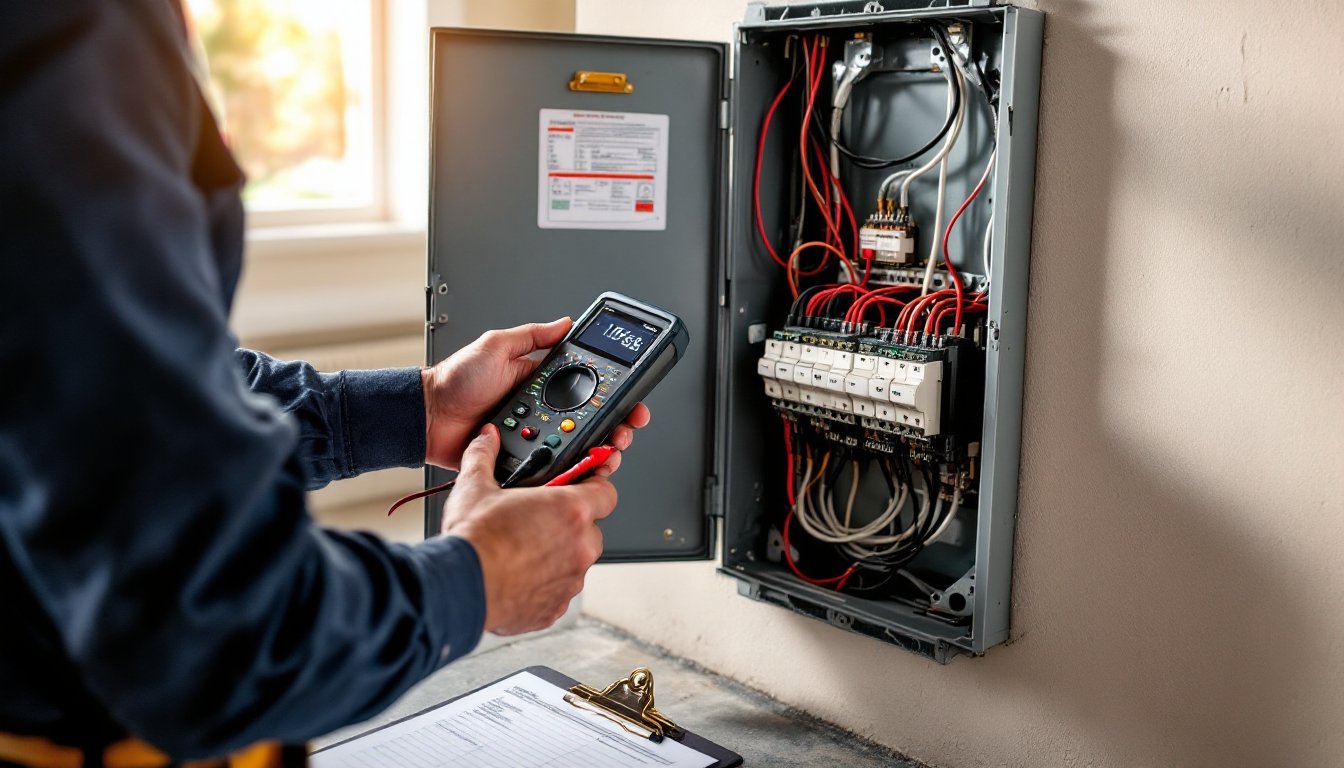
Industrial electrical systems aren’t residential wiring scaled up, they’re complex networks handling hundreds of amps, three-phase power, and equipment that costs more than most houses. When something goes wrong, it’s not a tripped breaker and a quick reset. It’s production downtime, safety hazards, and potentially five-figure emergency service bills. Whether you own a warehouse, manufacturing facility, or commercial property with industrial-grade electrical infrastructure, understanding maintenance services isn’t optional. It’s the difference between planned expenses and crisis management. This guide breaks down what industrial electrical maintenance involves, why it matters, and how to approach it without the usual contractor jargon.
Table of Contents
ToggleKey Takeaways
- Industrial electrical maintenance services prevent costly downtime—unplanned manufacturing outages average $260,000 per hour, making preventive inspections a smart investment.
- Regular thermographic scanning, insulation resistance testing, and torque verification catch 70–80% of electrical failures before they occur, avoiding emergency service rates and safety hazards.
- Licensed industrial electricians with proper credentials (master electrician or NETA certification) are essential, as systems operating at 208V, 480V, or higher require specialized expertise and comply with NEC standards.
- Industrial electrical failures cause approximately 25% of facility fires; documented maintenance records protect against safety liabilities and support insurance claims.
- Budget 1–3% of facility operating costs annually for industrial electrical maintenance, with contracts typically ranging from $3,000–$100,000+ depending on facility size and complexity.
What Are Industrial Electrical Maintenance Services?
Industrial electrical maintenance covers the systematic inspection, testing, repair, and replacement of electrical systems in commercial and industrial facilities. Unlike residential electrical work, which typically deals with 120/240-volt circuits and basic breaker panels, industrial systems operate at 208V, 480V, or higher three-phase power. They include motor control centers, variable frequency drives (VFDs), high-intensity discharge lighting, transformer banks, and distribution switchgear.
These services fall into several categories. Inspection and testing involves thermographic scanning to detect hot spots, insulation resistance testing (megger testing), and power quality analysis. Component maintenance includes cleaning and tightening connections, lubricating moving parts in contactors and disconnects, and replacing worn brushes in motors. System upgrades might involve retrofitting outdated panels, installing arc flash protection, or adding surge suppression.
The work requires licensed electricians with industrial experience, not just a residential license. Many jurisdictions require a master electrician or industrial electrical contractor license for this type of work. According to the National Electrical Code (NEC), industrial installations must meet specific articles covering motor circuits (Article 430), transformers (Article 450), and workspace clearances (Article 110). These aren’t DIY projects. Even if you’re handy with home wiring, industrial systems operate under different rules, voltages, and safety protocols.
Why Regular Electrical Maintenance Matters for Industrial Properties
Deferred electrical maintenance doesn’t just risk inconvenience, it risks people, production, and property. Industrial electrical failures cause roughly 25% of facility fires, according to the National Fire Protection Association (NFPA). Loose connections create resistance, resistance generates heat, and heat ignites insulation or surrounding materials. Regular maintenance catches these issues during thermographic scans before they escalate.
Downtime costs vary wildly by industry, but for manufacturing facilities, unplanned outages average $260,000 per hour when factoring in lost production, labor, and material waste. A preventive maintenance visit that costs $2,000–$5,000 quarterly can identify failing contactors, degraded insulation, or overloaded circuits before they shut down a production line at 2 a.m.
There’s also the compliance angle. OSHA 1910.303 through 1910.308 mandate safe electrical work practices and proper maintenance of electrical equipment. Insurance carriers often require documented maintenance records, and some policies include premium reductions for facilities with active preventive programs. If an electrical fault causes a fire and you can’t produce maintenance logs, expect claim disputes.
Finally, efficiency matters. Dirty connections, unbalanced loads, and aging components waste energy. A facility pulling 500 kW continuously at $0.12/kWh spends $525,600 annually on electricity. Improving power factor or reducing losses by even 5% through maintenance strategies saves $26,000 per year.
Common Industrial Electrical Maintenance Tasks and Procedures
Industrial maintenance involves both routine tasks and specialized procedures. Here’s what professionals typically address:
Routine tasks include:
- Thermographic scanning with infrared cameras to identify hot spots in panels, connections, and bus bars (typically done annually or semi-annually)
- Torque testing connections to manufacturer specs, loose connections are the #1 cause of electrical failures
- Insulation resistance testing using a megohmmeter to detect degraded wire insulation before it fails
- Breaker exercising, cycling breakers under no load to prevent contacts from seizing (especially important for breakers that sit closed for months)
- Cleaning panels, motor control centers, and enclosures to remove dust and debris that can create tracking paths
Specialized procedures include:
- Power quality analysis with recording meters to identify harmonics, voltage sags, or imbalances causing equipment malfunction
- Arc flash hazard analysis and labeling per NFPA 70E, required for worker safety
- Ground resistance testing to verify that grounding systems meet NEC Article 250 requirements
- Motor testing including vibration analysis, current signature analysis, and winding resistance tests
Preventive vs. Reactive Maintenance Approaches
Preventive maintenance follows a schedule, quarterly inspections, annual thermography, biennial ground testing, regardless of whether problems exist. It costs more upfront but catches 70–80% of failures before they happen. Think of it like changing your truck’s oil every 5,000 miles even though it’s running fine.
Reactive maintenance means fixing things after they break. It’s cheaper monthly until it isn’t. A $400 contactor that fails during a scheduled maintenance window gets swapped in 20 minutes. The same contactor failing at 3 a.m. on a Saturday means emergency service rates ($200–$300/hour), possible collateral damage to connected equipment, and production downtime.
Most facilities use a hybrid approach: preventive maintenance for critical systems (main distribution, life safety circuits, production equipment) and reactive maintenance for less critical loads. The ratio depends on your risk tolerance and production schedule. A 24/7 manufacturing operation leans heavily preventive. A storage warehouse with minimal electrical loads can skew reactive.
When to Hire Professional Industrial Electrical Services
Some electrical work is unequivocally professional territory. Here’s when you need licensed contractors:
Always hire professionals for:
- Any work on systems over 50 volts, this isn’t an area for confident DIYers
- Opening energized panels or working on live circuits (requires arc-rated PPE and specialized training)
- Anything involving three-phase power or motor control centers
- Installations requiring permits, most jurisdictions require licensed contractors for industrial work
- Arc flash analysis and labeling (requires engineering calculations)
- Testing that involves specialized equipment (megohmmeters, power quality analyzers, infrared cameras)
Warning signs you need immediate professional inspection:
- Burning smells near electrical equipment
- Breakers tripping repeatedly without obvious cause
- Flickering lights across multiple circuits
- Equipment running hotter than normal or making unusual sounds
- Visible corrosion, rust, or moisture in panels
- Panels warm to the touch
- Age: if your main distribution equipment is over 25 years old, get it assessed even if it seems fine
Some property owners maintain in-house electricians for routine work and call contractors for specialized tasks. That’s viable if your facility is large enough to justify full-time electrical staff. Smaller operations typically rely entirely on contractor relationships. Either way, work on industrial electrical systems requires proper licensing, this isn’t negotiable. Professional services connect property owners with qualified contractors when selecting providers.
How to Choose the Right Industrial Electrical Maintenance Provider
Not all electrical contractors handle industrial work. Here’s what separates qualified providers:
Licensing and credentials: Verify the contractor holds a master electrician license or industrial electrical contractor license in your state. Check that it’s current and not restricted. Ask about individual technician qualifications, NETA (InterNational Electrical Testing Association) certification is the gold standard for testing and maintenance.
Insurance and bonding: Industrial electrical work requires substantial coverage. Ask for:
- General liability insurance ($2 million minimum)
- Workers’ compensation (verify with their insurer, not just a certificate)
- Performance bonds for larger contracts
Specialized equipment: Quality contractors own their test equipment, infrared cameras, megohmmeters, power analyzers, ground resistance testers. If they’re renting or borrowing gear, they don’t do this regularly.
References and experience: Request references from facilities similar to yours. A contractor who maintains food processing plants may not understand the nuances of a data center’s electrical needs. Ask how they handle after-hours emergencies and what their typical response time is.
Documentation practices: Professional firms provide detailed inspection reports with photos, test results, and prioritized recommendations. They should track findings over time to identify deteriorating trends. Poor documentation suggests poor practices elsewhere.
Safety culture: Ask about their OSHA 300 log (recordable injuries) and safety training programs. Contractors working on energized equipment should follow NFPA 70E guidelines rigorously. If they’re casual about arc flash PPE or lockout/tagout procedures, walk away.
Cost Considerations and Budgeting for Electrical Maintenance
Industrial electrical maintenance costs vary widely based on facility size, equipment complexity, and service frequency. Here’s what to expect:
Service call rates run $150–$300 per hour for industrial electricians in most markets, higher in major metro areas or for specialized work. Emergency after-hours rates typically multiply regular rates by 1.5–2×.
Preventive maintenance contracts generally cost:
- Small facilities (under 50,000 sq ft, single-phase or light three-phase): $3,000–$8,000 annually for quarterly inspections
- Medium facilities (50,000–200,000 sq ft, substantial three-phase loads): $10,000–$25,000 annually
- Large facilities (manufacturing, heavy industrial): $30,000–$100,000+ annually, often with monthly service
These contracts typically include routine inspections, thermography, testing, minor repairs, and prioritized emergency response. Major component replacement is usually extra.
Specialized testing costs:
- Thermographic survey: $500–$2,000 depending on facility size
- Arc flash study: $3,000–$15,000 (engineering analysis, labeling, and documentation)
- Power quality analysis: $1,500–$5,000 for week-long monitoring
Budget considerations: Most facilities allocate 1–3% of facility operating budget to electrical maintenance. For a facility with $500,000 in annual electrical costs, that’s $5,000–$15,000 for maintenance. It sounds like a lot until you compare it to one unplanned outage.
Pricing varies significantly by region, local labor costs, and market conditions. These figures reflect 2026 national averages but expect higher costs in coastal markets and major cities. Energy-efficient building strategies can reduce both maintenance needs and operating costs over time. Get quotes from multiple contractors, but don’t choose solely on price. The cheapest bid often means cut corners, literally the last place you want that in electrical work.