A well-maintained electrical system doesn’t just keep the lights on, it protects your home from fire hazards, prevents costly emergency repairs, and ensures your circuits can handle modern power demands. Most homeowners never think about their electrical system until something goes wrong, but a few simple checks and a consistent maintenance schedule can catch problems before they become dangerous. Whether you’re living in a vintage home with knob-and-tube wiring or a newer build with AFCI breakers, understanding what to inspect, when to call a pro, and how to spot trouble will keep your home safer and your electrical infrastructure running smoothly for years.
Table of Contents
ToggleKey Takeaways
- Regular electrical system maintenance prevents residential fires, the leading cause of which is faulty wiring and overloaded circuits, while catching problems silently developing behind walls before they become dangerous.
- Monthly safety checks like testing GFCI and AFCI outlets, inspecting outlets for discoloration, and checking appliance cords take just minutes and can prevent costly emergency repairs ranging from $150–$300 per service call.
- Professional electrical inspections every 3–5 years (or annually for homes over 40 years old) identify loose connections, verify grounding integrity, and catch code violations that may be required corrections before selling or renovating.
- Warning signs requiring immediate professional attention include repeatedly tripping breakers, burning smells, electric shocks from appliances, buzzing or sizzling sounds, and outlets or switches hot to the touch, all of which signal potential fire hazards.
- Creating a simple electrical maintenance schedule with documented monthly, quarterly, and annual tasks—plus keeping a log of breaker trips and electrician work—ensures consistent protection and creates valuable history for insurance claims and future home sales.
Why Regular Electrical Maintenance Matters
Electrical failures are one of the leading causes of residential fires in the United States, with the National Fire Protection Association reporting thousands of incidents annually tied to faulty wiring, overloaded circuits, and aging components. Unlike plumbing leaks or roof damage, electrical problems often develop silently behind walls, giving little warning before a breaker trips repeatedly, an outlet sparks, or insulation begins to smolder.
Regular maintenance reduces risk in several measurable ways. It identifies wear on wire insulation before it exposes conductors, catches loose connections that generate heat, and verifies that protective devices like GFCI and AFCI breakers are functioning as designed. These devices are code-required in most jurisdictions under the National Electrical Code (NEC) for wet locations and bedrooms, respectively, but they can fail over time without visible symptoms.
Maintenance also keeps your system compliant with evolving standards. Homes built before 1980 may lack grounded outlets, adequate circuit capacity for modern appliances, or aluminum wiring that requires special attention. Inspections reveal whether your service panel can handle added loads from EV chargers, heat pumps, or home offices, common upgrades that strain outdated 100-amp services.
Finally, there’s the financial angle. A service call for a tripped breaker costs $150–$300 in most markets. An electrical fire can destroy a home. Scheduled inspections and minor repairs cost a fraction of either scenario and often pay for themselves by catching small issues early.
Essential Electrical Maintenance Tasks Every Homeowner Should Know
Monthly and Quarterly Safety Checks You Can Do Yourself
Test GFCI and AFCI outlets and breakers monthly. These devices protect against ground faults and arc faults, but they don’t last forever. Press the test button on each GFCI outlet (typically found in kitchens, bathrooms, garages, and outdoor locations). The reset button should pop out, cutting power. Press reset to restore function. If the test button doesn’t trip the outlet, replace it, it’s no longer providing protection. Do the same for AFCI breakers in your panel, usually labeled for bedroom circuits.
Inspect visible outlets and switches quarterly. Look for discoloration, cracks, or a loose faceplate. A brown or black stain around screw terminals suggests overheating. Outlets that feel warm to the touch or emit a burning smell need immediate attention. Flickering lights when you plug in an appliance can indicate a worn receptacle or a loose wire at the terminal.
Check cord condition on appliances and tools. Frayed insulation, exposed copper, or cracked plugs are fire hazards. Replace damaged cords immediately, don’t wrap them in electrical tape as a permanent fix. For high-draw appliances (space heaters, window AC units, power tools), confirm they’re plugged directly into a wall outlet, not a power strip or extension cord.
Walk your home’s exterior quarterly. Examine the weatherhead (where service lines enter), the meter base, and any exterior outlets or light fixtures. Look for rust, damaged conduit, or gaps where pests could enter. After storms, check for sagging service lines or damaged mast hardware. These are utility or electrician repairs, not DIY fixes, but early reporting prevents outages or hazards.
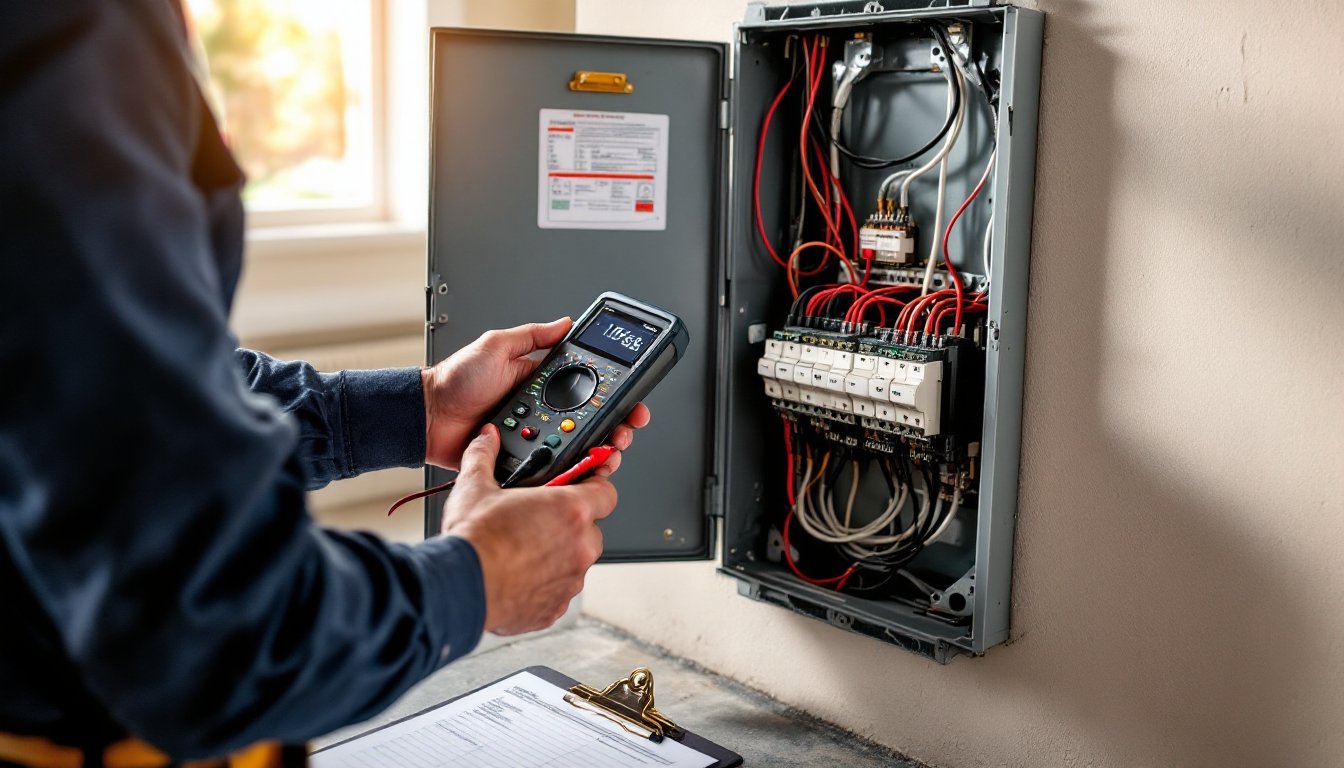
Listen for buzzing or humming near the panel. A faint hum is normal under load, but loud buzzing, crackling, or a sizzling sound indicates a loose connection or failing breaker. Open the panel door (with the main breaker off, if you’re comfortable doing so) and visually inspect for scorch marks, melted insulation, or a burnt smell. If you find any, call a licensed electrician before re-energizing.
Annual Professional Inspection: What to Expect
Even diligent homeowners should schedule a professional inspection every 3–5 years, or annually if the home is over 40 years old or has known issues. A licensed electrician will perform a load calculation to verify your service panel isn’t overloaded, test the integrity of grounding and bonding, and use a thermal imaging camera to spot hot spots invisible to the eye.
Expect the electrician to remove the panel cover and inspect connections with a torque screwdriver, ensuring terminals meet manufacturer specs. Loose connections cause heat, and heat degrades components. They’ll also verify wire sizing matches breaker ratings, a common DIY mistake is installing a 20-amp breaker on 14-gauge wire rated for only 15 amps.
The inspection should include a review of your main service disconnect, grounding electrode system (ground rods or Ufer ground), and any subpanels. If you have aluminum wiring (common in homes built 1965–1973), the electrician should check for proper terminations using antioxidant compound and CO/ALR-rated devices, which prevent oxidation and failure.
You’ll receive a written report noting any code violations, safety concerns, and recommended upgrades. Some findings, like missing AFCI protection or ungrounded outlets in wet areas, may be required corrections if you’re selling the home or pulling a permit for a remodel.
Warning Signs Your Electrical System Needs Immediate Attention
Breakers that trip repeatedly. A breaker that trips once under heavy load may just need the load redistributed. A breaker that trips frequently, or trips with no obvious cause, signals a short circuit, ground fault, or failing breaker. Don’t just reset it, track what’s on that circuit and call an electrician if the pattern continues.
Burning smell or visible smoke. This is a fire in progress or imminent. Shut off power at the main breaker and evacuate if necessary. Even if the smell dissipates, have the system inspected before restoring full power. Smoldering insulation or overheated connections can reignite.
Shocks or tingles from appliances or fixtures. A mild shock when touching a metal appliance, faucet, or light fixture indicates a grounding fault or energized chassis. This is life-threatening and requires immediate professional repair. Do not use the appliance or fixture until it’s been evaluated.
Lights dimming when appliances start. Some dimming when a high-draw motor (like a refrigerator compressor or well pump) kicks on is normal in older homes. Severe dimming, or dimming that worsens over time, suggests undersized wiring, a poor connection at the service panel, or a problem with the utility connection. An electrician can measure voltage drop and determine the cause.
Buzzing, sizzling, or popping sounds. These indicate arcing, an electrical current jumping a gap it shouldn’t. Arcing generates intense heat and is a primary ignition source for electrical fires. If the sound comes from an outlet, switch, or fixture, stop using it immediately. If it’s coming from the panel, treat it as an emergency.
Rust or corrosion at the panel. Moisture inside a panel is a serious hazard. It can come from a roof leak, condensation, or a failed weatherhead seal. Corrosion degrades connections and can cause breakers to fail. If you see rust, water stains, or mineral deposits, have the panel inspected and the moisture source corrected.
Outlets or switches that are hot to the touch. A warm faceplate can indicate an overloaded circuit or a loose connection. If it’s hot enough that you pull your hand away quickly, shut off the breaker feeding that circuit and call an electrician. This is a fire waiting to happen.
Creating Your Electrical Maintenance Schedule
Building a maintenance routine doesn’t require an engineering degree, just consistency and a simple tracking method. Start by documenting your home’s electrical basics: service size (100, 150, or 200 amps, noted on the main breaker), panel age (often stamped inside the door), and any known issues like aluminum wiring or a subpanel.
Monthly tasks (10 minutes):
- Test all GFCI outlets and AFCI breakers
- Walk the home for flickering lights, warm outlets, or unusual sounds
- Check exterior service components for visible damage
Quarterly tasks (30 minutes):
- Inspect all outlets and switches for discoloration or cracks
- Test smoke and carbon monoxide detectors (though technically not electrical maintenance, these are often hardwired and integrated)
- Review extension cord and power strip use, eliminate daisy-chaining and permanent installations
- Check appliance cords for wear
Annual tasks (professional):
- Schedule a licensed electrician for a full inspection if your home is over 40 years old, or every 3–5 years for newer homes
- Thermal imaging scan of the panel and high-load circuits
- Load calculation if you’ve added major appliances or EV charging
- Torque check on panel connections (this requires shutting off the main breaker and removing the cover, strictly a pro task)
Keep a log in a notebook or smartphone app. Note breaker trips, even minor ones, along with what was running at the time. Patterns reveal whether a circuit is overloaded or a specific appliance is faulty. Also document any work done by electricians, including permit numbers, this history is valuable for future owners and for insurance claims.
For smart home enthusiasts, connected devices now include circuit-level energy monitors that install in the panel and alert you to unusual draw or potential faults. These systems aren’t a replacement for inspections, but they add a layer of real-time monitoring that can catch problems between scheduled checks.
Finally, treat your electrical system maintenance as non-negotiable as changing HVAC filters or cleaning gutters. Consistency matters more than perfection. A homeowner who tests GFCIs monthly and calls an electrician at the first sign of trouble is far safer than one who only thinks about wiring when the power goes out.
Conclusion
Electrical maintenance isn’t glamorous, but it’s one of the highest-return activities a homeowner can do. A few minutes each month and a professional inspection every few years prevent fires, extend the life of your system, and keep your home ready for modern electrical demands. Treat your panel with the same respect you’d give a gas line or structural beam, because when it comes to safety, it deserves it.